Adverbs of Frequency

Introduction
In this lesson, you'll learn how to use the English adverbs of frequency. You'll also learn some useful adverb sentence templates.
The lesson starts with a short conversation between Sarah and Cathy who are shopping for a new shirt.
Conversations
English
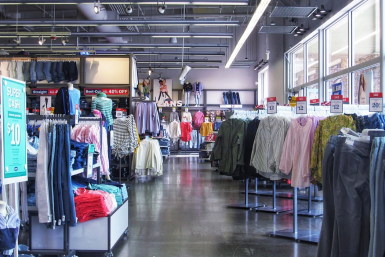
Cathy needs a new shirt, so she and Sarah walk into a clothing store.
Sarah: This t-shirt is very nice.
Cathy: Yeah, but it's too small.
Sarah: How about this blouse?
Cathy: I don't like the colour.
Sarah: These shirts are on sale and they are very cheap.
Cathy: I like the blue shirt and the red shirt.
Sarah: I think I want to buy one of these shirts too.
Cathy: Which color do you like?
Sarah: I like the white shirt.
Cathy: Let's go buy them.
Português
Cathy precisa de uma camisa nova, por isso ela e Sarah entram numa loja de roupa.
Sarah: Este t-shirt é muito agradável.
Cathy: Sim, mas é demasiado pequeno.
Sarah Que tal esta blusa?
Cathy: Não gosto da cor.
Sarah: Estas camisas estão à venda e são muito baratas.
Cathy: Gosto da camisa azul e da camisa vermelha.
Sarah: Eu acho que eu quero comprar uma dessas camisas também.
Cathy: De que cor gosta?
Sarah: Gosto da camisa branca.
Cathy: Vamos comprá-los.
Vocabulary
 This t-shirt is very nice.
|
Este t-shirt é muito agradável. |
|
How about this blouse?
|
Que tal esta blusa? |
|
I don't like ___.
|
Eu não gosto de ___. |
|
I think I want to buy one of these shirts too.
|
Eu acho que eu quero comprar uma dessas camisas também. |
|
Let's go buy them.
|
Vamos comprá-los. |
|
cheap
|
barato |
|
shirt
|
camisa |
Anúncio
Adverbs of Frequency
When talking about routines and habits, adverbs of frequency are often used. The following table shows these adverbs ordered from most frequent to least frequent.
| 100% | always |
| almost always | |
| usually | |
| often | |
| frequently | |
| sometimes | |
| occasionally | |
| seldom | |
| hardly ever | |
| rarely | |
| 0% | never |
Examples
|
They always go to the store on Monday. |
Eles sempre ir até a loja na segunda-feira. |
|
I'm never late. |
Eu nunca estou atrasado. |
|
She never drinks coffee. |
ela nunca bebe o café. |
|
I often drink tea in the afternoon. |
Muitas vezes eu bebo o chá da tarde. |
Sentence Templates
A very common sentence template in English is:
subject + be very + adjective.
The subject of a sentence can be a noun or pronoun.
Examples
| The pizza is very good. | A pizza é muito bom. |
| We are very hungry. | Estamos com muita fome. |
| I am very happy. | Estou muito feliz. |
| She is very smart. | Ela é muito inteligente. |
| The TV is very expensive. | A TV é muito caro. |
| The store is not very busy. | A loja não é muito ocupado. |
Another common sentence template in English is:
subject + be too + adjective.
Examples
| The coffee is too cold. | O café está muito frio. |
| I am too tired. | Eu estou muito cansado. |
| The TV is too expensive. | A TV é muito caro. |
| Is the TV too expensive? | É a TV muito caro? |
| The TV is not too expensive. | A TV não é muito caro. |
Here are some more very common sentence templates that use the verb be, adjectives and adverbs.
- subject + be really + adjective.
- subject + be quite + adjective.
- subject + be so + adjective.
- be + subject + really so + adjective?
- subject + be pretty + adjective.
Similar templates can be used with the other linking verbs.
Examples
| She is really happy. | Ela está realmente feliz. |
| He is quite tall. | Ele é bastante alto. |
| You are so nice! | Você é tão gentil! |
| Is it really so hard? | É realmente tão difícil? |
| The coffee is pretty strong. | O café é bastante forte. |
| The cookies are so good! | Os biscoito são tão bons! |
| It was pretty easy. | Foi muito fácil. |
| She seems really nice. | Ela parece muito gentil. |
| I feel so tired. | Sinto-me tão cansado. |
| The ice feels so cold. | O gelo parece tão frio. |
| Does it really look so bad? | Será que realmente parece tão ruim? |
| They look pretty tired. | Eles parecem muito cansados. |
Practicar
Pressione o ícone de áudio e escreva a palavra ou frase em inglês que você ouve. Pressione o botão Verificar para ver se suas respostas estão corretas.
|
|
|
|
|
|
|
|
|
|
|
|
|
|
Quiz
Put the words in the correct order. Make sure to use correct capitalization and punctuation.
Question: good very drink is the. Answer: The drink is very good.
1) not it very is expensive.
2) too is pizza the cold.
3) often boy hungry is the.
4) long too movie the is?
5) tired very girl the is.
6) always go I store the to.
7) angry look the people very.
8) pillow soft very not the is.
9) too cup hot the feels.
10) hard really it so is?